No products in the cart.
Discover the best DDoS protection services in 2026. Compare top anti-DDoS CDNs and cloud scrubbing providers across mitigation capacity, CC attack defense, network routing, pricing models, and specific use cases for gaming, APIs, e-commerce, and enterprise.
Recently, many projects and websites have been frequently targeted by DDoS attacks. Many projects did not consider the possibility of cyberattacks when they first went live, leaving their source IPs directly exposed. It is only after suffering losses from attacks that they regret their decision and start scrambling to find a CDN or deploy a WAF. In their desperation, they often resort to any solution available, but the quality of high-defense CDN services on the market varies widely, and some providers fail to truly resolve the issue even after being selected. In this article, we’ll provide some insights based on effective protection strategies.
First, let’s discuss the current DDoS landscape. According to Cloudflare’s threat report for the first half of this year, bandwidth-consuming DDoS attacks surged by 519% year-over-year, with attack vectors primarily concentrated on DNS and CLDAP reflection. Yewsafe’s DDoS attack report also indicates that the current attack landscape is severe, with attacks growing increasingly intense. What’s even more concerning is that Radware’s statistics show Web DDoS attacks (i.e., application-layer attacks) have risen by 110.6% year-over-year.
What does this mean? Attackers are no longer simply flooding systems with brute-force traffic; instead, they are leveraging AI-driven analysis to automatically switch attack vectors and targets. Furthermore, botnets are growing in scale—moving beyond simple reflection amplification—with many attacks now starting at the terabit level, making it impossible for manual defenses to respond in time.
Many people confuse high-security CDN with standard CDN, which is clearly a mistake. There is a huge difference between the two—they are entirely different things. Standard CDN primarily accelerates the delivery of static resources, while high-security CDN builds upon standard CDN by adding traffic protection capabilities: it identifies, discards, and cleans attack data before returning it to the origin server.
Currently, there are many vendors on the market touting high-security CDN services, all claiming to “ignore attacks” and offer “terabyte-level defense.” In reality, however, many of these services fall short of their claims. When attacks actually reach the terabyte level, they either fail to retrieve content from the origin server or take too long to filter the traffic, making it impossible to switch back to the origin server within seconds.
Real-World Testing of Leading Providers
In this series, we’ll conduct an in-depth evaluation of the leading high-defense CDN providers on the market. The testing method is straightforward: we’ll directly connect real users, simulate mixed attacks, and observe the cleaning rate, cleaning time, false-positive rate, source-server access stability, and acceleration latency performance!
Product link:https://www.alibabacloud.com/en/product
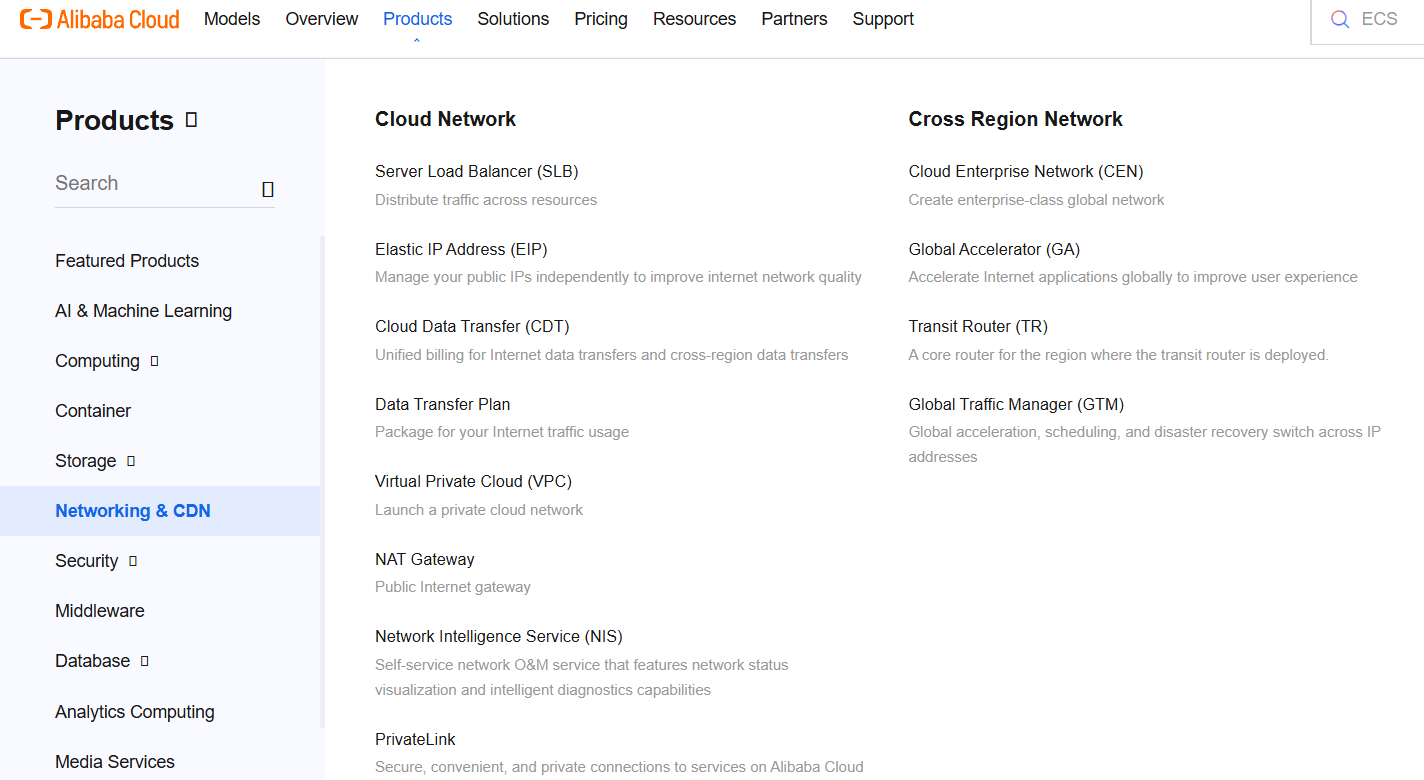
Alibaba Cloud is a globally renowned provider of cloud server infrastructure. Its market position in mainland China is unquestionable, and it also wields significant influence in the Asia-Pacific region. In real-world testing, Alibaba Cloud demonstrated extremely high efficiency in mitigating SYN floods, with virtually zero jitter on the origin server. However, one detail is worth noting: Alibaba Cloud’s CDN service plans to stop enabling DDoS protection for new users starting in May 2025; existing users who have already activated the service will not be affected. If you are just now considering onboarding, you will need to use Alibaba Cloud Shield or other high-defense product lines.
In terms of pricing, the basic monthly plan starts at 28,000 yuan, which includes a protection threshold of 100 Gbps; usage exceeding this threshold is billed at 30 yuan per Gbps per day. This pricing presents a significant barrier to entry for small and medium-sized enterprises and is better suited for e-commerce or financial clients with ample budgets and medium-to-large-scale operations.
Who it’s for: Medium-to-large enterprises that are already deeply integrated with the Alibaba Cloud ecosystem, have extremely high compliance requirements, and possess ample budgets.
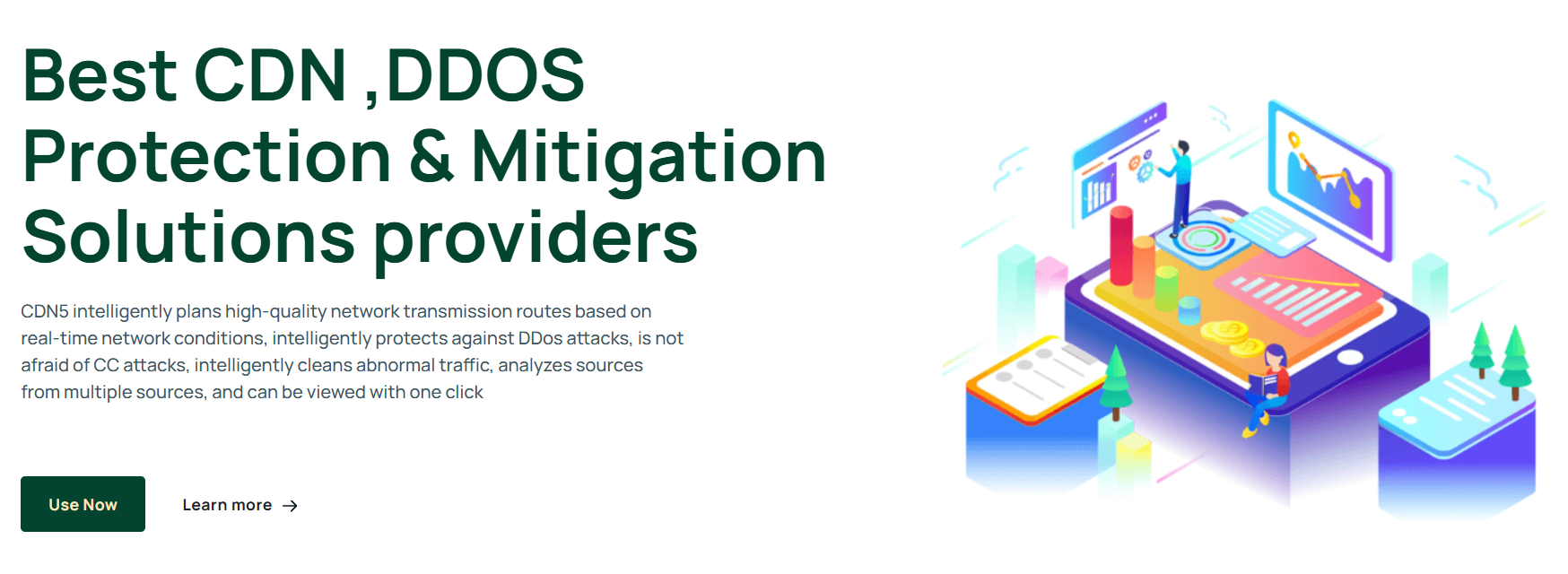
CDN5 is a high-security CDN service provider catering to the Asia-Pacific region and cross-border businesses, with products focused on integrated website acceleration and DDoS/CC protection. Its network supports BGP/CN2, SSL, WebSocket, and global acceleration, making it particularly suitable for businesses with requirements for fast access speeds in Hong Kong and Asia, cross-border origin retrieval, and attack protection. For gaming, APIs, video and film, e-commerce, fintech, and websites frequently targeted by attacks, the configuration process is relatively straightforward.
In terms of pricing, CDN5 operates on a package-based model, with the Standard Edition costing approximately $499 per month and the Business Edition approximately $1,999 per month. Custom solutions are available for businesses with higher protection requirements. Compared to products that charge solely based on attack traffic or cleaning volume, the advantage of this package model is that it makes budget management relatively straightforward. It is particularly suitable for customers who already know exactly how much protection capacity they need and wish to address both CDN acceleration and security protection simultaneously.
Who It’s For: Cross-border websites targeting users in Hong Kong, Southeast Asia, and globally; gaming, API, video and film, e-commerce, SaaS, and fintech businesses; as well as medium- to large-sized enterprises that need long-term protection against DDoS, CC, HTTP flood, and other attacks.
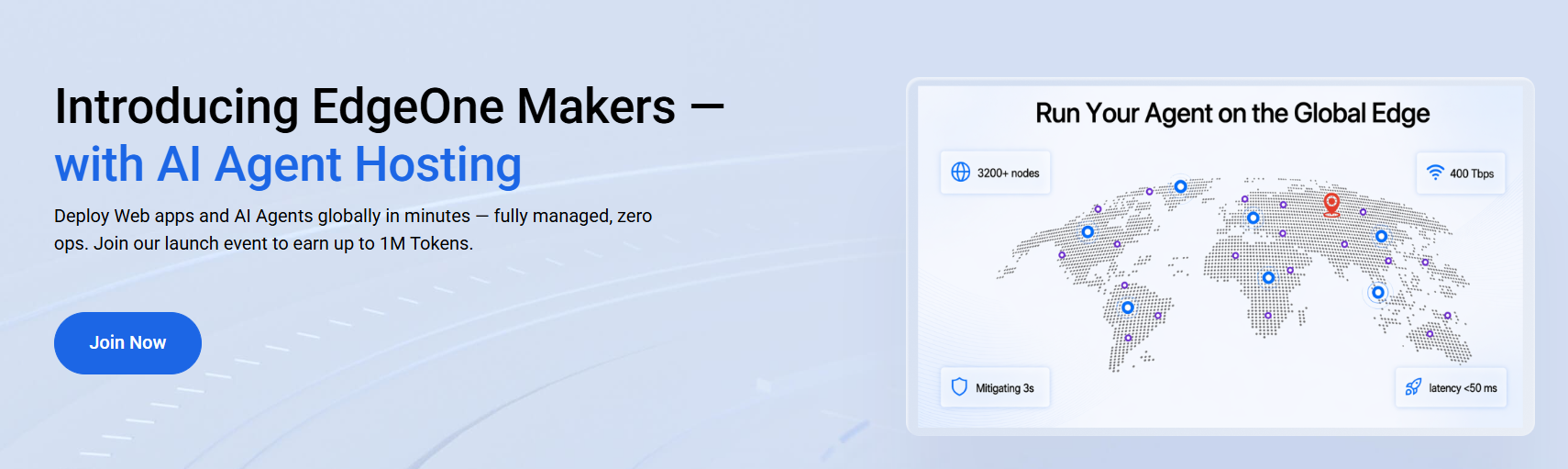
Like Alibaba Cloud, Tencent Cloud is a well-known internet infrastructure service provider in mainland China. Building on its own gaming business, Tencent Cloud’s high-defense CDN has earned an excellent reputation in the gaming and live-streaming industries. With over 2,700 EdgeOne edge nodes and a single-point defense capacity of approximately 1.2 Tbps, it has extensive experience in countering UDP attacks and long-connection CC attacks.
In our practical testing, we found that Tencent Cloud’s WAF and DDoS detection modules can be deployed at the edge nodes, resulting in a much faster response to CC attacks compared to the traditional models used by other vendors. Latency can be kept below 20 ms, and if you enable full protection mode, the performance overhead is among the lowest in the industry.
Tencent Cloud’s basic protection plan starts at 3,000 yuan per month, while its traffic-cleaning package, billed based on actual traffic, costs approximately 10 yuan per GB. Tencent Cloud has also introduced a “minimum guaranteed bandwidth + elastic peak” billing model, which charges based on the minimum guaranteed bandwidth during normal operations and automatically scales up during attacks, making it particularly suitable for services with high traffic volatility.
Ideal for: Gaming, live streaming, and social media services—especially those with a user base concentrated in southern China or in scenarios relying on mobile networks.
Cloudflare is an internet infrastructure company. A large number of websites, APIs, and applications place Cloudflare in front of their servers to handle content delivery, security protection, traffic control, and network acceleration. In other words, many internet requests pass through Cloudflare before they actually reach the website’s servers.
Cloudflare’s free plan can indeed withstand some small- to medium-scale DDoS and CC attacks, and its DNS proxy mode is very straightforward. Its Enterprise plan features Anycast nodes in 330 cities worldwide, with intelligent bot detection reaching 94% accuracy. Most operations require no manual intervention, and adaptive traffic baseline learning automatically identifies anomalous patterns.
However, in the Asia-Pacific region, there is one core issue that remains unresolved: Cloudflare suffers from significant latency, averaging between 70 and 90 ms. This may be unacceptable for enterprises with very low latency requirements. Additionally, the Enterprise plan is expensive, and the extra architectural costs associated with regional solutions—starting at $50,000—make it unaffordable for many businesses.
Who it’s for: Businesses expanding overseas, as well as web applications and APIs with high requirements for automated protection.

Akamai takes a different approach. Its CDN edge protection handles the first layer of filtering for web traffic, while Prolexic uses a standalone mitigation infrastructure to protect non-CDN assets, covering data centers, IP networks, and cloud environments. With 32 Anycast mitigation centers worldwide, Akamai is one of the companies with the strongest mitigation capabilities. It supports a zero-second mitigation SLA and, through flexible, rapid, and diverse hybrid deployment models, serves as a core service provider for many government agencies and large corporations.
The trade-off with Akamai is cost and complexity. Prolexic’s entry-level contracts typically range from $10,000 to $15,000 per month, often require a minimum three-year commitment, and involve configuring BGP peering and a proprietary ASN. This product is not intended for small and medium-sized enterprises.
Ideal for: Large enterprises, telecommunications carriers, and financial groups with complex hybrid infrastructures.
Founded in 2011 as SkyCache and rebranded in 2012, Fastly is headquartered in San Francisco. As of March 2026, its capacity had reached 578 Tbps, giving it exceptional capacity to absorb high-traffic attacks at the network layer. Its DDoS protection is directly integrated into the edge platform, can be enabled with a single click, and takes effect within seconds.
Fastly’s CSOC (Customer Security Operations Center) has a 15-minute SLA for responding to critical incidents, with a median first response time of just 1 minute. Based on real-world testing, it has a 4.8-star rating on Gartner Peer Insights with 65 reviews; user feedback highlights “fast edge mitigation” and “good stability during incidents.”
However, Fastly’s protection solution requires you to already be using its CDN or computing services; support for standalone use of DDoS protection is limited. Pricing is not transparent and requires contacting sales for a quote.
Who it’s for: Applications and APIs already using Fastly CDN that need to quickly enable edge DDoS mitigation.
Yewsafe is a globally renowned CDN service provider and an emerging leader in the AI-powered edge acceleration industry. As a provider that integrates high-security CDN, global acceleration, and edge security, it offers enterprise-grade CDN solutions, AI-powered optimization, and real-time DDoS protection. Trusted by thousands of enterprises worldwide, it delivers fast, secure, and reliable content delivery services.
Yewsafe is particularly well-suited for the Asia-Pacific region, strategically targeting areas where Cloudflare has weaker coverage and strengthening its node deployment. Currently, it is the best cybersecurity and CDN acceleration provider in the Asia-Pacific region aside from Alibaba Cloud. It offers both free plans and custom enterprise packages, boasts a large base of loyal users, and is highly favored by AI developers.
Who it’s for: Ideal for high-traffic services requiring an exceptional acceleration experience and frequently targeted by DDoS attacks, such as financial services and API calls.
Radware’s DefensePro is a dedicated, in-line DDoS mitigation appliance that uses behavioral analysis and machine learning to detect and block attack traffic in real time. In NSS Labs testing, the DefensePro 1020 blocked 100% of attacks while maintaining a 100% normal traffic forwarding rate. With a 4.6-star rating and 83 reviews on Gartner Peer Insights, users generally recognize its ability to adapt to complex DDoS attacks and its real-time mitigation effectiveness.
Imperva focuses more on application security. Its App Protect solution starts at $59 per site per month, with the Business edition priced at $299 per site, and includes DDoS protection and advanced analytics. For small and medium-sized sites with limited budgets that still require basic DDoS protection, Imperva offers a relatively accessible entry point.
Who it’s for: Medium-to-large enterprises with their own network infrastructure that require in-line protection devices (Radware); budget-conscious small and medium-sized sites (Imperva).
With the continuous advancement of AI and technology, DDoS protection has moved beyond the stage where simply “throwing more resources at the problem” is enough. Attackers are using AI to automate their attack processes; if defenders remain stuck in a model reliant on rule-based matching and manual responses, the gap will only continue to widen. When selecting a service provider, greater weight should be given to “soft skills” such as automated mitigation capabilities, behavioral analysis accuracy, and edge response speed.
One more thing to keep in mind: no solution can guarantee 100% protection against attacks. What a high-defense CDN can do is minimize the impact of attacks and reduce recovery time to the shortest possible duration. A multi-layered defense strategy—combining a high-defense CDN, WAF, origin server redundancy, and regular drills—is the optimal integrated solution for both acceleration and protection!

 Enrique Fay
Aug 06, 2024
 Enrique Fay
May 22, 2025
 Enrique Fay
Aug 11, 2024
 Enrique Fay
Mar 17, 2025
 Enrique Fay
Aug 11, 2024